



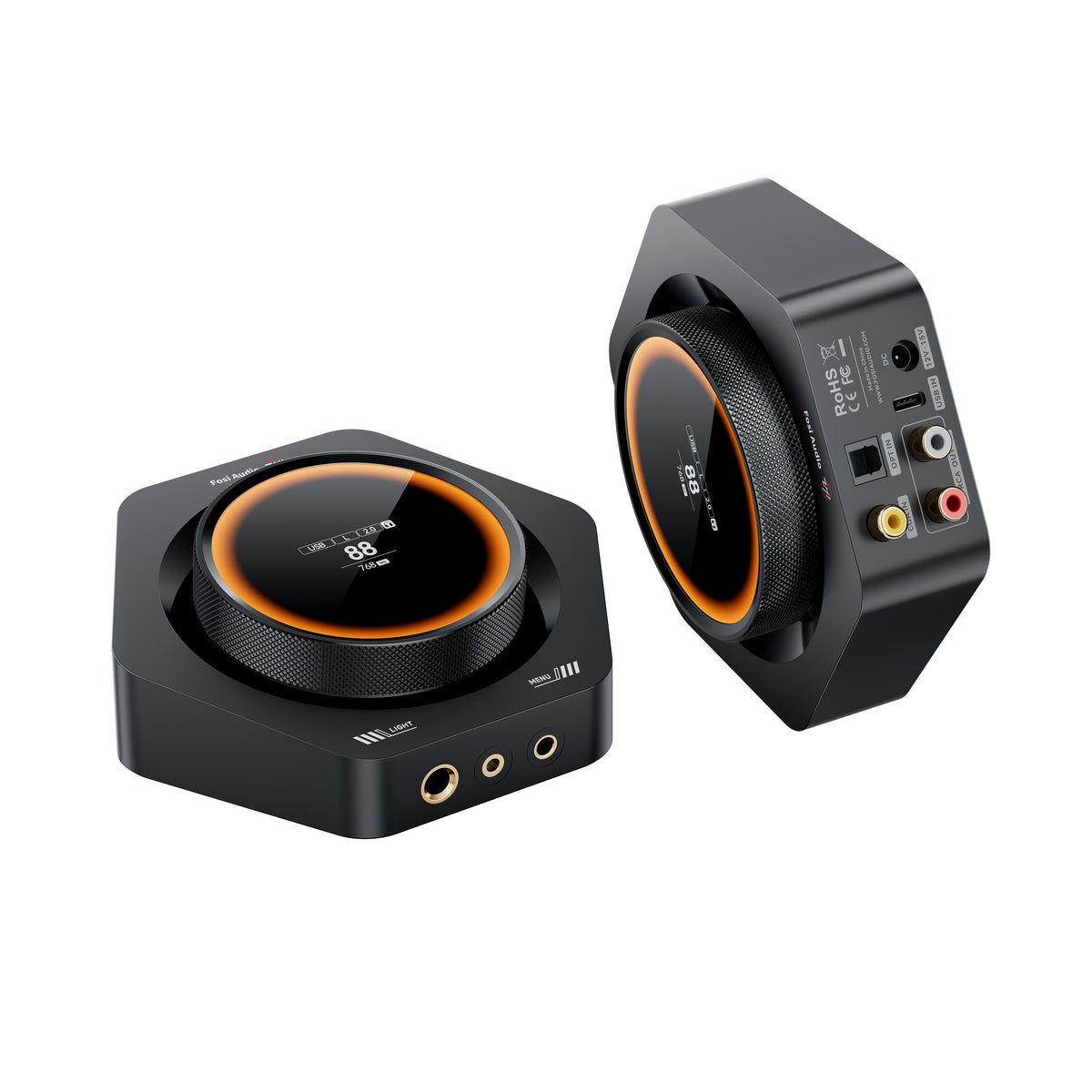



Fosi Audio ZH1 Smart-Tuned Fully Balanced Desktop DAC Amp
Features
- AI Smart PEQ Tuning
- 2300mW Fully Balanced Power
- HiFi & Gaming Versatility
- Dynamic Display & RGB Control
- AI Smart PEQ Tuning
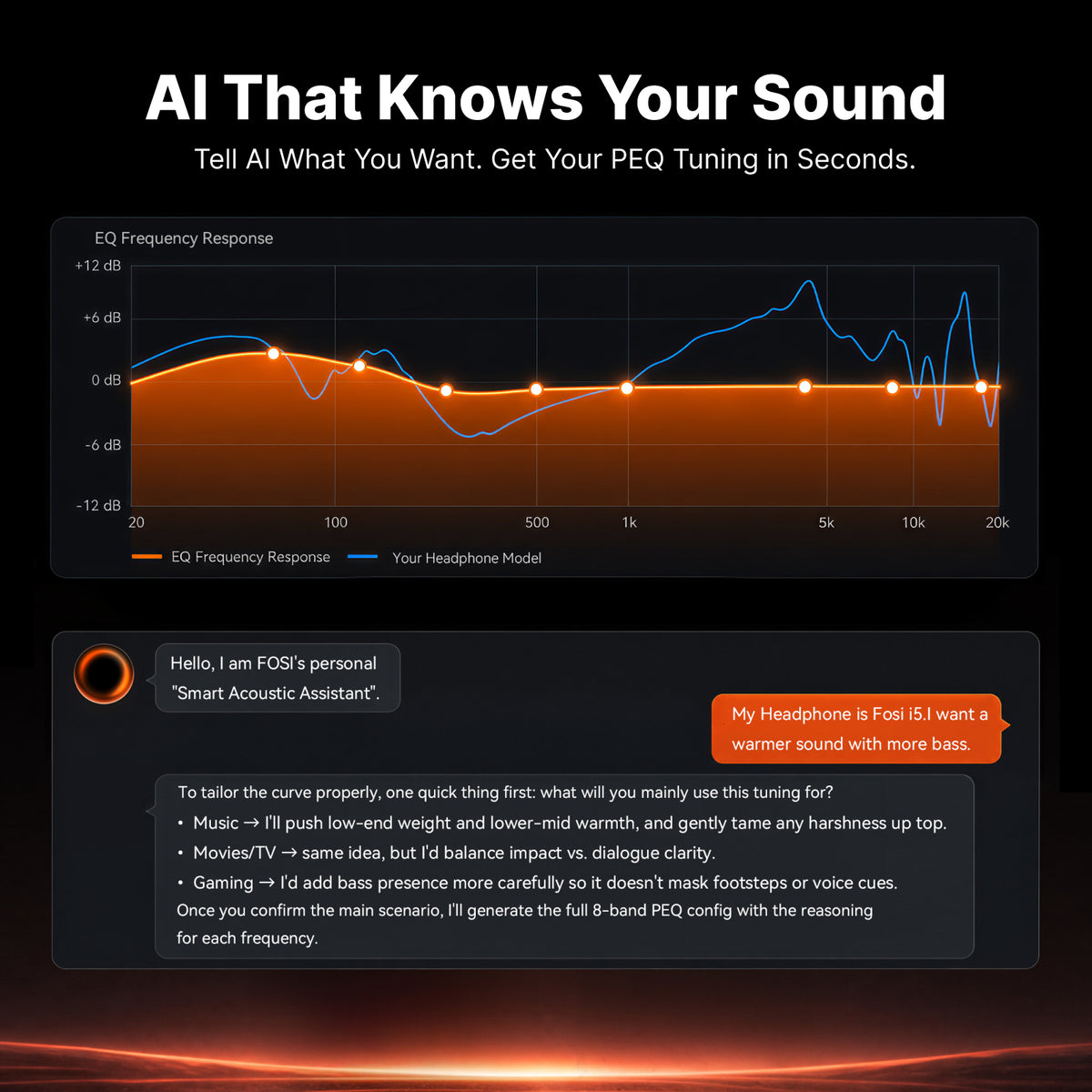
Generate personalized PEQ settings with one tap using AI presets, Harman Target matching, and web-based visual EQ control. - 2300mW Fully Balanced Power
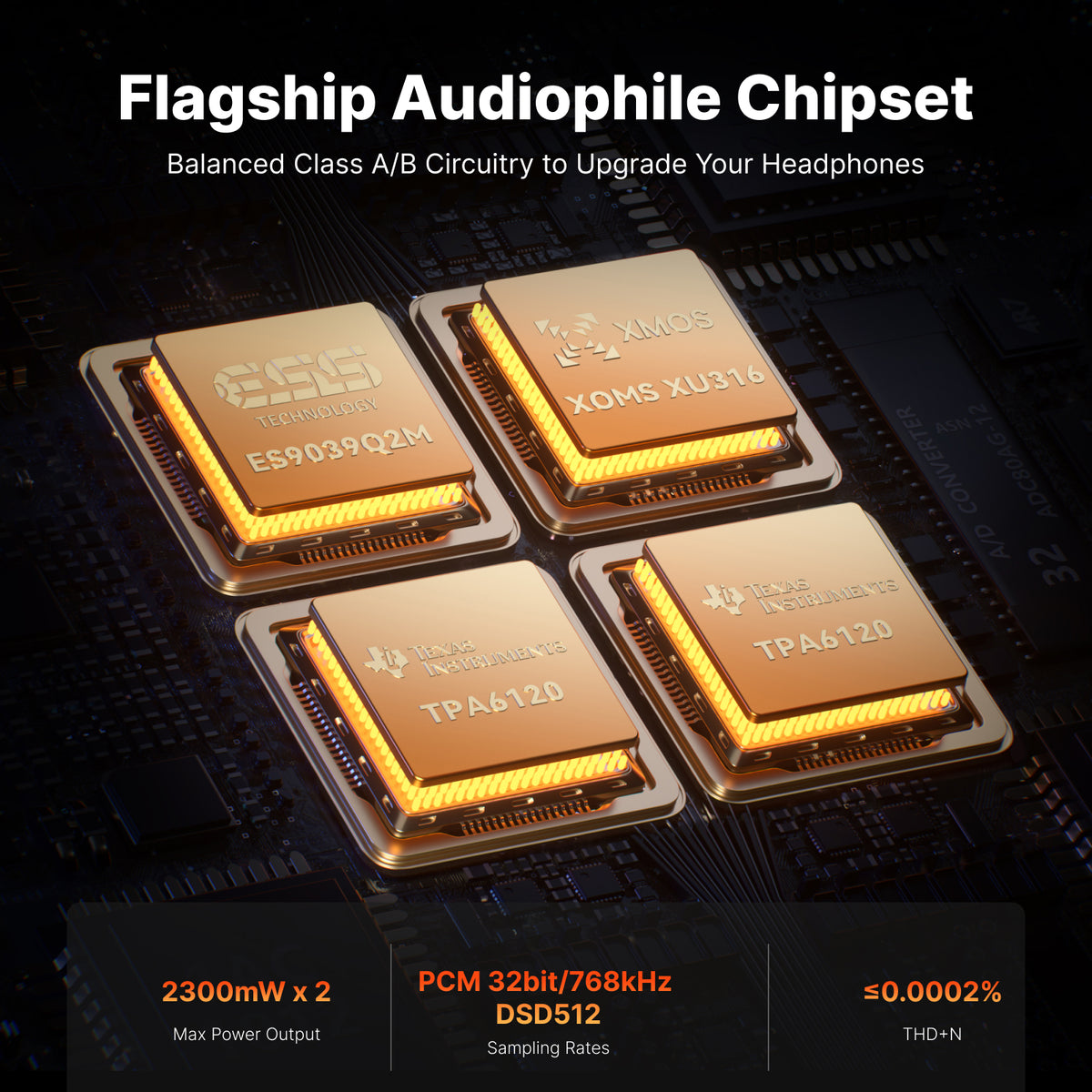
ES9039Q2M DAC, XMOS XU316, and dual-power balanced architecture deliver up to 2300mW @ 32Ω with ultra-low 1.9μV noise. - HiFi & Gaming Versatility
6.35mm and 4.4mm outputs, 3-level gain, and UAC 1.0 support make it compatible with IEMs, headphones, PCs, CD transports, PS5, and Nintendo Switch. - Dynamic Display & RGB Control
1.2" HD LCD, aluminum knob, touch controls, and 9 customizable RGB lighting modes provide intuitive control and visual feedback.
Compare PowerCore Series


$199.99
Fast, Free Shipping!
Free Shipping In 3-7 Days On Orders
2-Years Official Warranty
Fosi Audio Devices Are Covered For A Period Of 2 Years
30 Day Money-Back Guarantee
Full Refund Available Via Return In 30 Day


Product Specification
DACESS ES9039Q2M
USB ProcessorXMOS XU316
AmplifierTI TPA6120 x2
Amplifier CircuitFully Balanced Class AB
Balanced Output Power (32Ω/THD+N<1%)2300mW x2
Single-Ended Output Power(32Ω/THD+N<1%)589mW×2
InputsCoaxial, Optical, USB
Outputs3.5mm, 4.4mm, 6.35mm, RCA
Remote Control——
Headphone Impedance8-300Ω
MAX Sampling RatePCM 32bit/768kHz, DSD512
SNR≥ 124dB
Dynamic Range≥ 124dB
THD+N≤ 0.0002%
Noise Floor≤1.7μV
Power InputDC 12V-15V
The ZH1 is an appealing desktop unit. Its display is enjoyable to use, and I am quite satisfied with the sound. The knob requires some adjustment, as it seems to need frequent turns during setup. Once everything is configured, it is rarely an issue unless I switch between speakers and headphones or the reverse; then the knob needs a slight turn. The only concern I noticed is that the base becomes fairly warm, but I expect that is the heat sink, so it is likely normal.
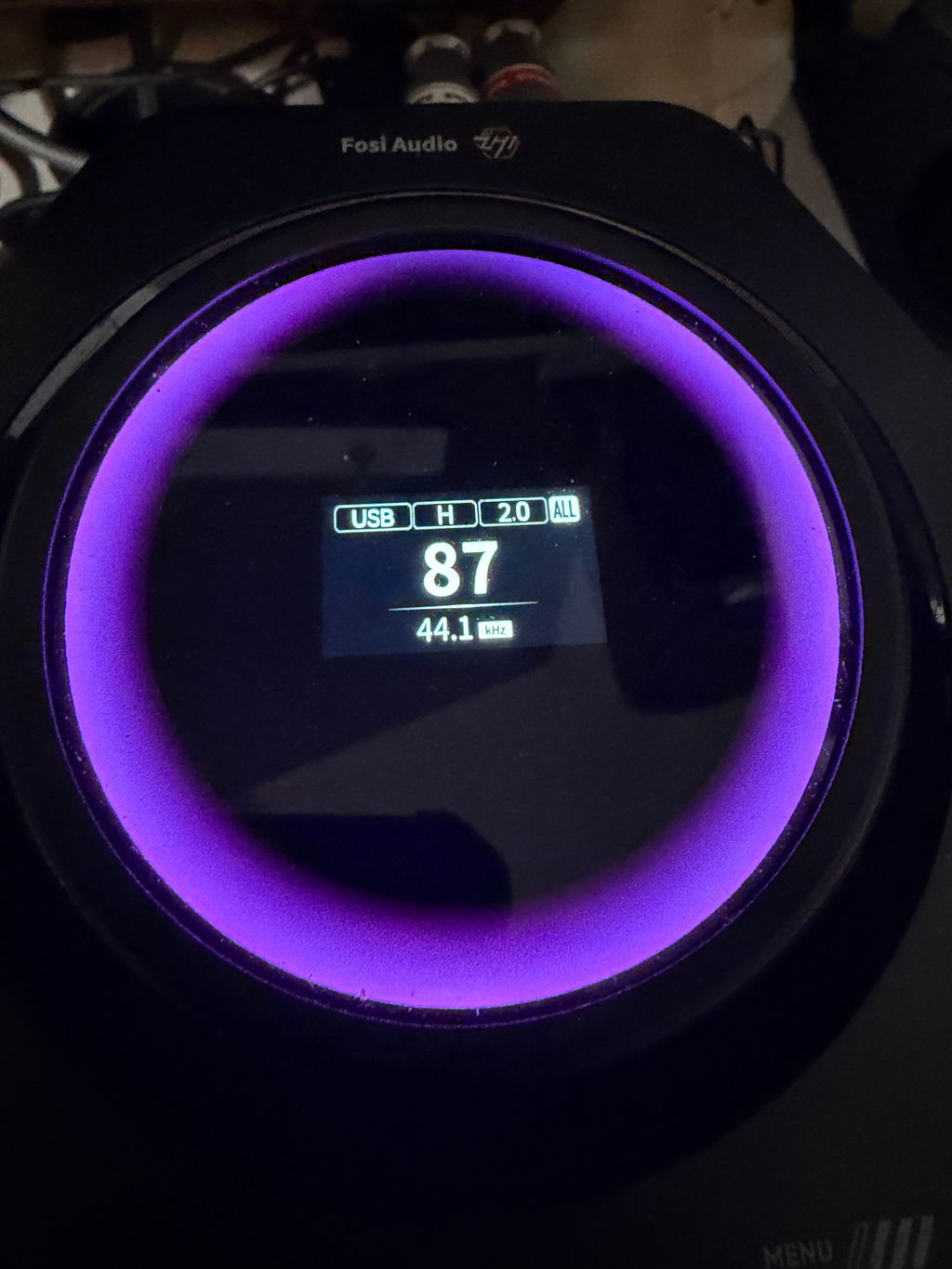
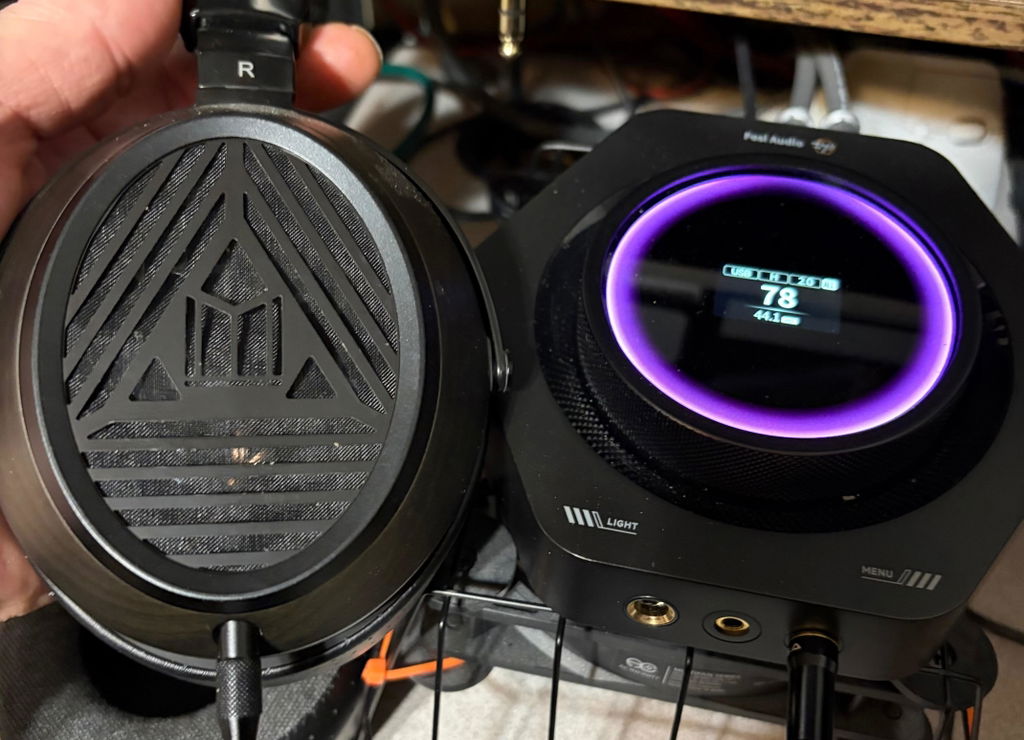
I own the ZH3, ZA3, and T20X. I use them for my desktop setup while gaming and media consumption for a few headphones. I've used them with HD6XX, K7XX, K702, and Sundaras. They do the job well but had multiple components and felt like they were being under utilized since I don't really do much critical listening at the desktop. I've since paired those with some KEF Q1 Metas and a RSL 10e.
Now on to why this makes sense for me. I like to swap headphones from time to time. Manually tweaking EQ or Treble/Bass was easy enough but dialing it in was cumbersome. I needed a DAC to clean up the noise floor for the AKGs as they pick up so much noise and imperfections in a chain. I wanted an amp to let the HD6XXs shine as well as the Sundaras. This new Dac/preamp/amp combo was exactly what I wanted. It has all of it in a aesthetically pleasing package and leaves a small footprint on my desk. It goes well with the lighting I have on my system, or you can just have it off. There are multiple front jacks, 6.35/3.5/4.4mm all in one place. The features are easy enough to use but the manual leaves much to be desired. The best features are locked down on the webapp.
Here is where I found the most surprisingly useful feature. I normally don't like AI but this is where AI is super useful. The webapp has customizable EQs or PEQ, The AI can create EQ settings for you depending on what headphones you use and takes your personal input into account while looking at the harmon curve and the headphones tested baseline into account. AKGs tend to be very sibilant and harsh on the upper end, sometimes anemic bass as well. The AI can suggest EQ changes and explains what the changes are for and why. It also suggests what to change and why if there are things you miss about a certain sound. You can save these EQs to your PEQ and I assume it stays on the ZH1. I have programmed all 3 EQs onto the unit and they all do different things and this is massively convenient for me. I hope this doesn't become E-waste at some point because this feature alone is really useful for me as someone who doesn't want to tweak EQ endlessly. This gives me a good baseline, explains why and then I can tweak it further from that. Thus far it sounds great and is super pleasing to use. I set my volume to 70 on the dial and adjust from my desktop for any other volume adjustments. I don't plan on touching the unit too much, the body is plastic outside the wheel itself. It doesn't feel as premium as ZH3 or ZA3 with their whole aluminum body. It still looks and feels solid, I don't mind the materials as long as they hold up and look good, which this does both. I don't know about the longevity of it, this is brand new. If it's anything like the other Fosi products I have it will do it's job well and last a long time.
Also, their customer support is amazing in the US. If there are issues I don't doubt the support I would receive for the ZH1. If your use case is like mine then I think this is a no brainer. I think its beautiful to look at.